

How to Make Cross Stitch Christmas Cards
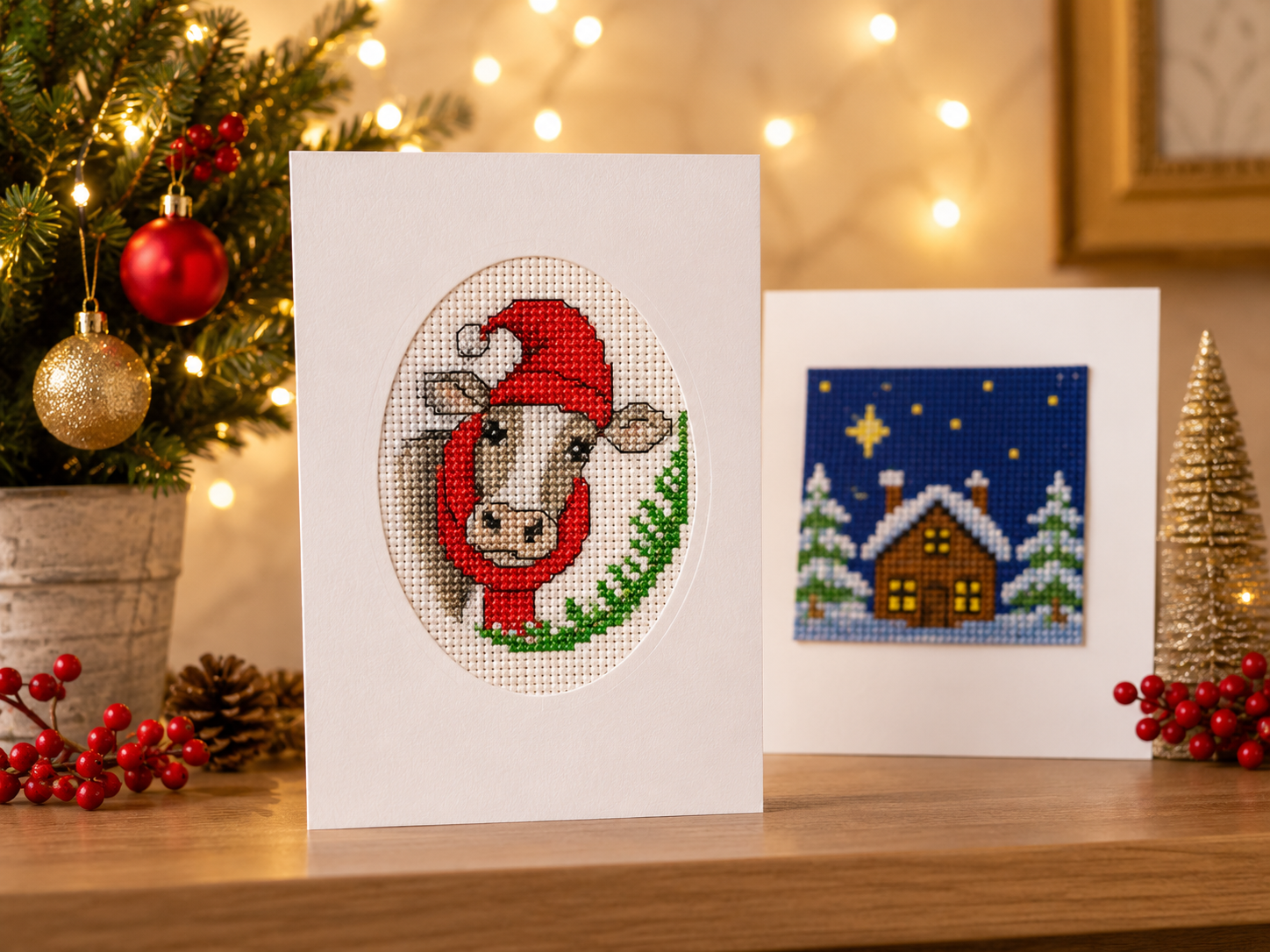
A hand-stitched Christmas card is a small gift in itself — and one of the most satisfying projects in cross stitch. The designs are little, so each card only takes an evening or two, and the finished result is something people genuinely keep. This guide walks you through the whole process: choosing a design, picking the right card to mount it in, and the mounting itself — the part most instructions skip.
What you'll need
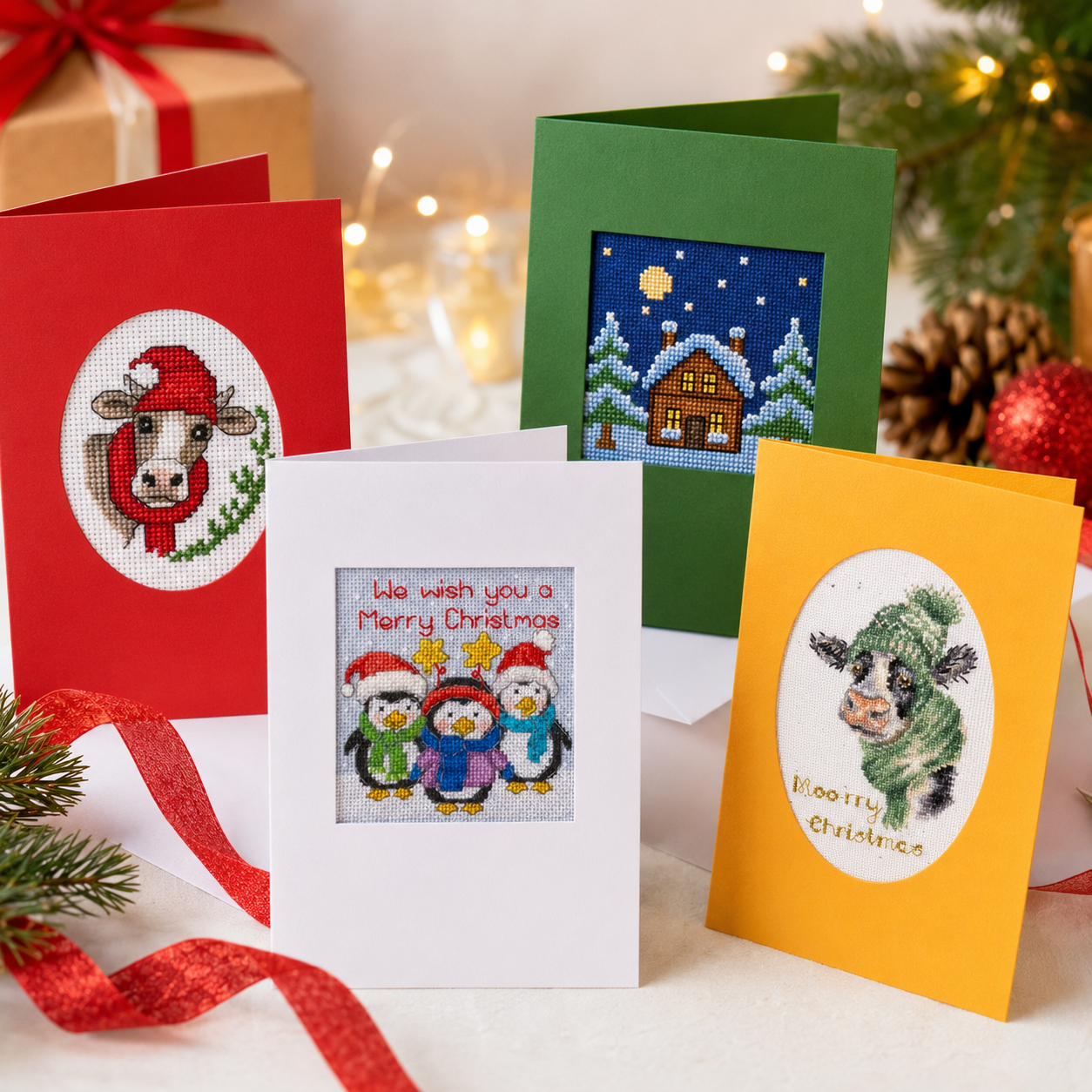
- A design to stitch. The easiest start is a Christmas card making kit — it includes the chart, fabric, threads, needle and usually the card itself. Kits start at £3.95 for the Mouseloft range, and we have hundreds of festive designs from robins to gingerbread men.
- An aperture card — the folded card with a cut-out window your stitching sits behind. If your kit includes one, you're set; if you're stitching from a chart or want spares, we stock Peak Dale aperture card packs (10 cards with envelopes from £3.55) and single aperture cards from 63p.
- The basics: small scissors, and double-sided tape for mounting.
Choosing a design that fits your card
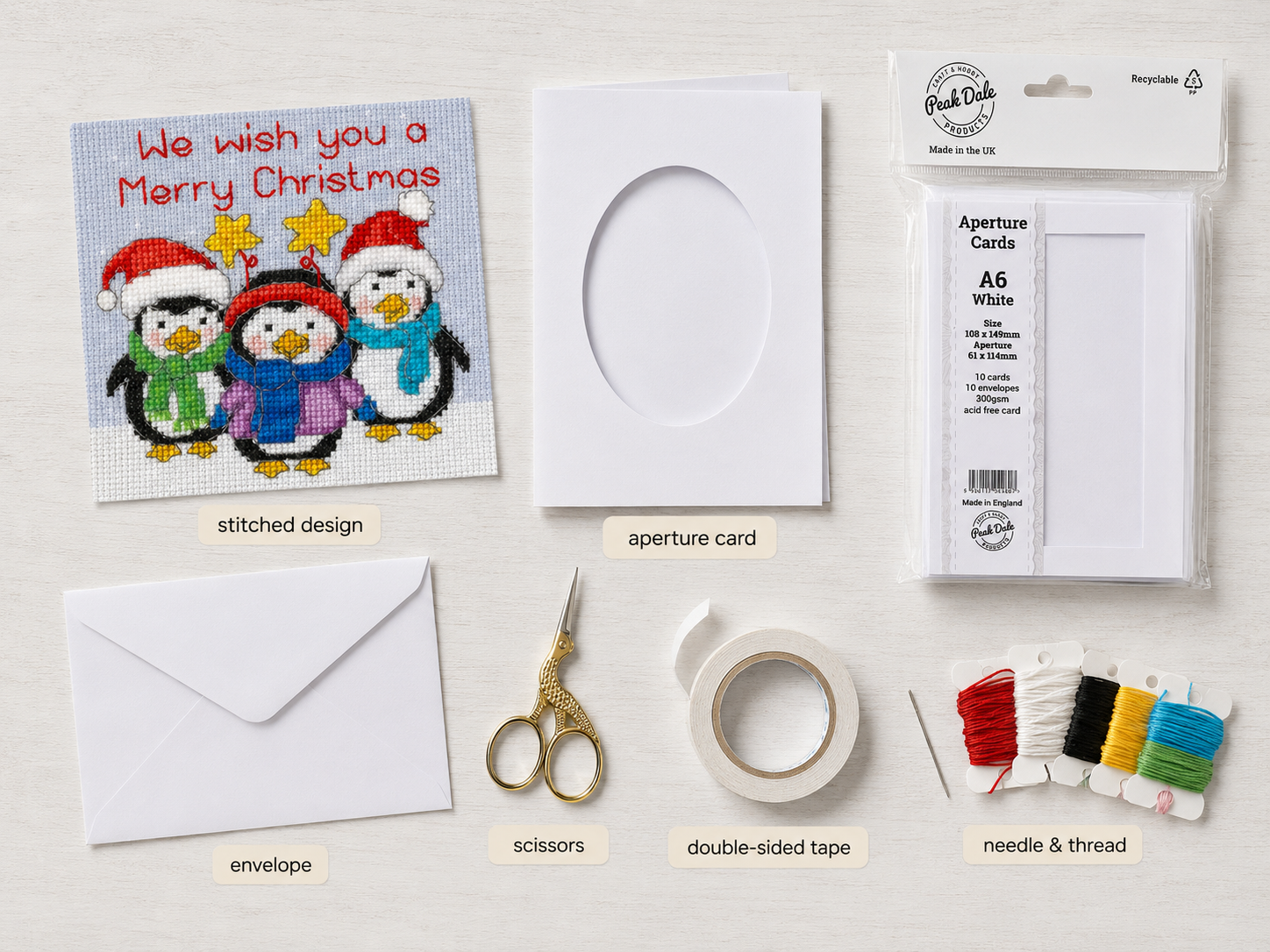
Cross stitch designs are measured in stitches, and the finished size depends on your fabric count. On 14-count aida, divide the stitch count by 14 to get the size in inches. As a rule of thumb:
| Design size (stitches) | Finished size on 14-count | Card to choose |
|---|---|---|
| Up to 30 × 30 | About 5.5cm (2¼in) | Small round or square aperture |
| Around 40 × 40 | About 7.5cm (3in) | A6 aperture card |
| Around 50 × 50 | About 9cm (3½in) | A5 aperture card |
Pick an aperture slightly smaller than your fabric and slightly larger than the stitched area, so the design sits comfortably in the window with fabric to spare for taping. Kit designs are already matched to their cards, so this only matters when you're mixing and matching.
Stitching tips for card designs
- Start in the centre of the design and the centre of your fabric — with small designs there's little margin for drifting off-centre.
- Small festive motifs mostly use whole stitches and a little backstitch, which makes cards an ideal first project.
- Keep the back tidy: with an aperture card, a lumpy back can show through the front as bumps. Weave your thread ends in rather than knotting.
How to mount your stitching in an aperture card
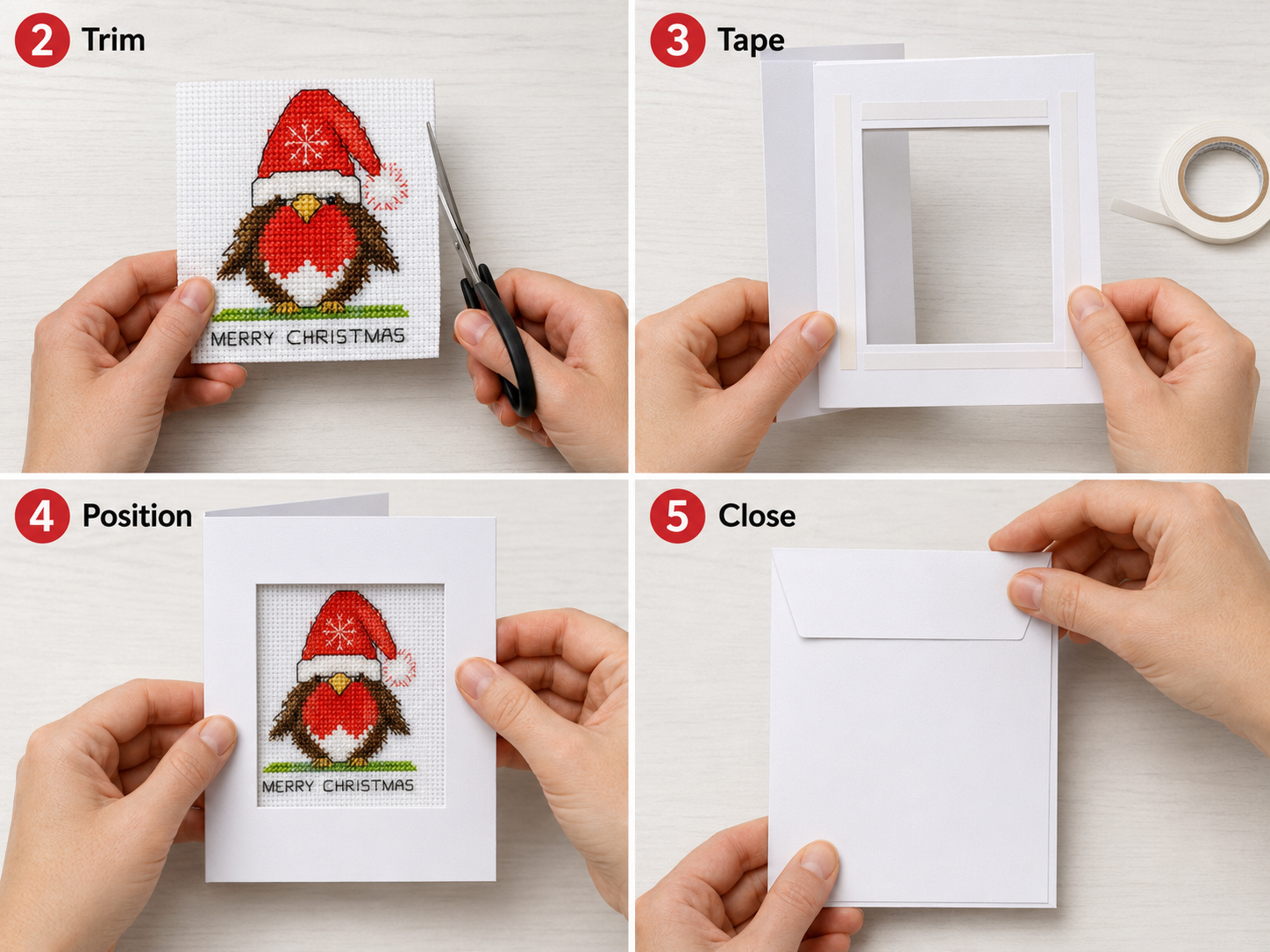
Most aperture cards are tri-fold: three panels, with the window in the middle panel and a flap that folds behind it to hide your fabric edges. Here's the method:
- Press your finished stitching face down on a clean towel with a cool-to-medium iron. The towel stops the stitches being flattened.
- Trim the fabric so it's larger than the aperture on every side by about 2cm, but smaller than the card panel — you need overlap to tape, but no fabric peeking out of the edges.
- Tape around the window. Run double-sided tape around the aperture on the inside of the middle panel.
- Position the design. Hold the card up and centre your stitching in the window before pressing it onto the tape — check it from the front before you commit. Straighten, then press down firmly.
- Close the backing flap. Tape around the edges of the fold-behind panel and press it shut over the back of your fabric. Neat front, tidy inside, done.
If your kit includes its own mounting instructions, follow those — some cards use a self-adhesive backing instead of tape.
When to start stitching for Christmas
A card design takes most stitchers one to three evenings. If you'd like a handmade card for everyone special, starting one card a week in September gives you a dozen by early December — in good time for posting. Stitched aperture cards usually post as a standard large letter.
Quick answers
Can a complete beginner make a cross stitch card? Yes — card kits are among the easiest projects there are, and our Christmas card making kits include everything you need.
Do aperture cards come with envelopes? The Peak Dale packs we stock include matching envelopes.
Can I iron my stitching? Yes — face down on a towel, cool to medium heat, and ideally before mounting rather than after.
Ready to start? Browse our full range of Christmas card making kits — hundreds of designs, with everything included.